



Out at sea, certainty is rare. Weather can shift without warning, visibility can collapse within minutes, and even familiar routes can become unpredictable. In such environments, marine radar becomes a vessel’s most dependable system for maintaining awareness and control.
At KDU World, marine radar is viewed not just as an equipment requirement, but as a strategic safety solution. It enables vessels to operate confidently across diverse conditions, from congested ports to open offshore waters. With increasing maritime traffic and stricter regulatory expectations, the importance of advanced radar systems continues to grow.
Marine radar is an electronic navigation system that entails the use of radio waves to track and locate ships in the vicinity of a ship. It scans the surrounding area and displays the targets, such as ships, coastlines, buoys, and weather patterns on a screen.
This system works by transmitting electromagnetic pulses and recording the time it takes when the pulses strike an object. This makes the radar calculate the distance and direction of the vessel, which would constitute a real-time 360-degree view of the surroundings of the vessel.
Practically, radar plays a crucial role in the scenario of a lack of visibility. Night navigation, heavy rain, and dense fog can considerably diminish the capabilities of the human eye. The radar monitors are employed to make sure that vessels will continue with their operations despite such unfavorable conditions.
The importance of marine radar:
A marine radar system consists of a few interwoven sub-elements that interact to identify and provide targets. They consist of a rotating antenna, transmitter, receiver, processor, and display unit.
The radar antenna is in continuous motion and sends pulses of microwaves to the surrounding environment. When such pulses strike an object, some part of the signal is reflected to the radar system. The system will then compute the distance as the period that the signal takes to bounce back and determine the direction based on the position of the antenna. This information is calculated and presented on a Plan Position Indicator (PPI), where targets are indicated relative to the location of the ship.
In modern radar improvements, the following are included:
Marine radar systems are primarily classified based on frequency bands and underlying technology. Each type serves a specific operational purpose depending on the vessel’s environment and requirements.
Comparison of radar types:
Most commercial vessels use a combination of X-band and S-band radar to ensure complete situational awareness.
Radar is an important component of the modern navigational equipment used on marine vessels to facilitate safety, efficiency, and effective navigation in difficult situations. The success and performance of radar rely significantly on how effectively it detects, tracks, and displays objects in real-time conditions. To achieve maximum efficiency of operations, advanced radar devices should have the following attributes.
VisionMaster Net Radar
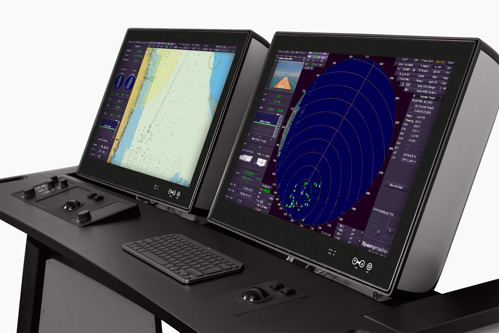
VisionMaster Net Radar by Sperry Marine, which is offered by KDU World, is one of the modernized forms of marine radar technology. It makes use of highly sophisticated detection functions and a user-friendly design that makes everyday operations easier.
The system is designed to provide accurate radar images and excellent target tracking in all sea states. Its high processing mechanisms make it possible to easily track and recognize targets even in challenging environments.
One of the most remarkable features of VisionMaster Net Radar can be considered to be its high-quality clutter suppression. This enables the system to remove unwanted noise and be able to see and interpret the important targets.
Some of the major characteristics of VisionMaster Net Radar are:
SIMRAD ARGUS X Band & S Band
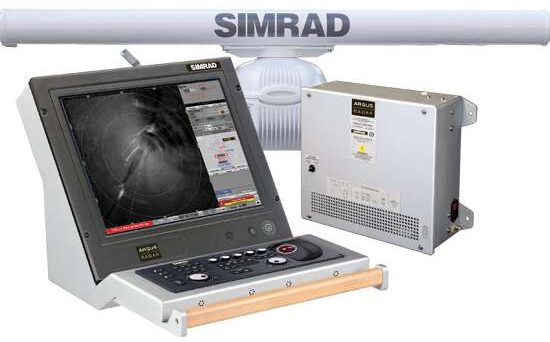
SIMRAD ARGUS X band S band by Navico is available in the professional marine market, where reliability and flexibility are crucial. It is a modular radar system that accommodates a diverse array of vessel configurations.
The solid-state construction of the system provides it with durability, as it makes it easier to maintain and perform servicing. Its modular design allows it to be flexibly installed, so it is suitable for a wide range of bridge designs and types of vessels.
ARGUS can also support a high number of tracked targets so that operators can have a comprehensive view of surrounding traffic in busy maritime areas.
The main characteristics of SIMRAD ARGUS:
SIMRAD HALO
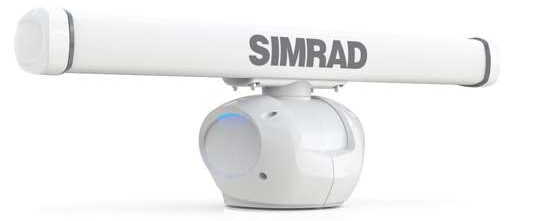
SIMRAD HALO radar systems operate under solid-state pulse compression technology, which provides long-range detection as well as high-resolution imaging. This makes them highly versatile for different operational scenarios.
The system is able to detect targets of up to 72 nautical miles as well as detect objects in very close proximity. The ability to provide situational awareness in both offshore and near-shore operations is the dual capability.
The HALO radar also ensures that it is user-friendly and reliable. The solid-state components lower the maintenance needs and guarantee stable performance.
The main characteristics of the SIMRAD HALO:
SIMRAD R5000
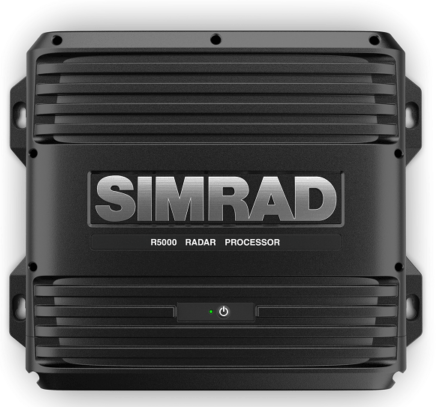
The SIMRAD R5000 by OEM Navico is a modular radar system that was specifically designed to suit SOLAS-class vessels. It can be configured in both X band and S band and can be customized according to the requirements of the vessels.
The modular design of the system enables operators to create single or multi-radar systems, which is why the system is applicable to both large and small vessels with diverse operational profiles. Its user-friendly interface makes it easy to use even in a complex navigation environment.
R5000 also ensures uniformity in the various radar systems; this is advantageous to fleets working in different areas.
The main characteristics of SIMRAD R5000:
Marine radar offers several advantages that significantly affect vessel safety and performance. These advantages are vital for maritime operations today.
Radar increases safety levels due to the provision of timely detection of obstacles and other vessels. This allows taking necessary precautionary measures. It also contributes to increased efficiency because radar makes tracking fully automatic.
Advantages offered by radar include:
Marine radar has remained among the most vital technologies in maritime navigation. It allows vessels to safely operate in areas where visibility cannot be trusted.
As radar technology improved, modern systems have now become clearer, more automated, and more reliable. Innovations like VisionMaster Net Radar and SIMRAD radar range are examples of how innovations are changing the safety of the maritime industry.
At KDU World, it is not just about the provision of equipment. Being an authorized distributor of marine equipment and services, the emphasis is on providing complete radar solutions that bring safety, efficiency, and long-term operational success.