
September 25, 2026

Industrial automation brings together machines, controllers, sensors, software and communication systems to keep industrial processes running efficiently. Two important technologies in this environment are PLC (Programmable Logic Controller) and SCADA (Supervisory Control and Data Acquisition). A PLC handles real-time control close to the equipment, while SCADA provides centralised monitoring, visualisation, and data access. When these systems work together, operators can control equipment reliably while having a clear view of what is happening across the operation.
PLCs and SCADA systems work together, but they are responsible for different parts of the automation process. A PLC is the local controller. It connects with field devices such as sensors, switches, motors and valves. It receives input signals, processes programmed logic and sends commands to connected equipment. PLCs are built to perform these tasks continuously and reliably, including in demanding industrial environments. A SCADA system works at the supervisory level. It collects information from PLCs and other connected equipment and presents it through screens, dashboards, alarms and trends. Operators can use this information to monitor equipment and understand process conditions from a centralised location.
PLCs are the control layer of many industrial automation systems. They continuously process input signals and execute programmed instructions based on the requirements of the application. A PLC can be used to:
● Monitor sensors and field devices
● Control motors, pumps and valves
● Execute automated sequences
● Generate control signals
● Monitor operating conditions
● Communicate with other automation systems
● Support equipment and condition monitoring
The reliability of the PLC becomes especially important in marine, offshore and industrial applications where equipment may operate under vibration, temperature variations and other demanding conditions. This is where KDU World's range of DEIF PLC and automation controllers can support
specialised applications.
As an authorised DEIF PLC provider in the UAE, KDU World provides advanced programmable controllers that meet the demanding requirements of marine, offshore and industrial applications.
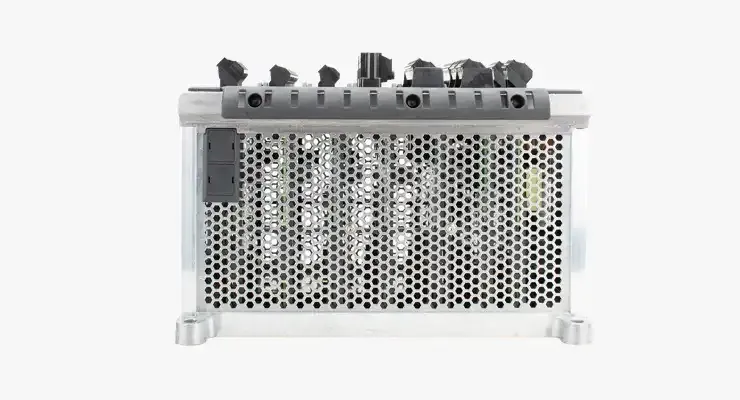
The DEIF iE 350 is a programmable automation PLC controller designed for land and marine applications. It combines modular I/O with built-in three-phase grid measurement, providing flexibility for different automation and energy management requirements. The controller supports EtherCAT, CODESYS V3 and IEC 61131-3 programming, along with remote configuration and visualisation. Designed for demanding environments, the iE 350 remains fully functional from -40 °C and provides resistance to shock, vibration and electrical disturbances. Its modular architecture supports distributed I/O and flexible system configurations, while built-in cybersecurity features help protect the controller in connected automation environments. When integrated with SCADA, the iE 350 can provide control and equipment data to the supervisory layer for centralised monitoring.
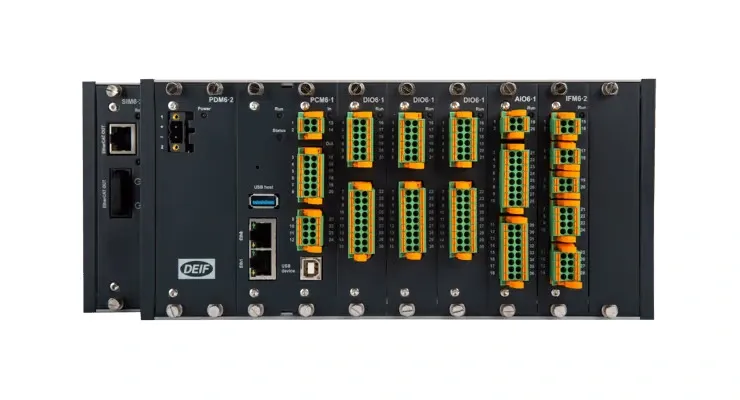
The DEIF AMC600 is a programmable automation controller for land, marine and wind power applications. It supports communication technologies such as EtherCAT, PROFINET, Modbus TCP/RTU and OPC UA. The controller has a modular design and supports digital and analogue I/O, PT-100 inputs and condition monitoring modules. Its connectivity options make it suitable for applications where control, measurement and communication need to work together.
When connected to a SCADA environment, the AMC600 can provide equipment and process information to the supervisory layer for centralised monitoring.
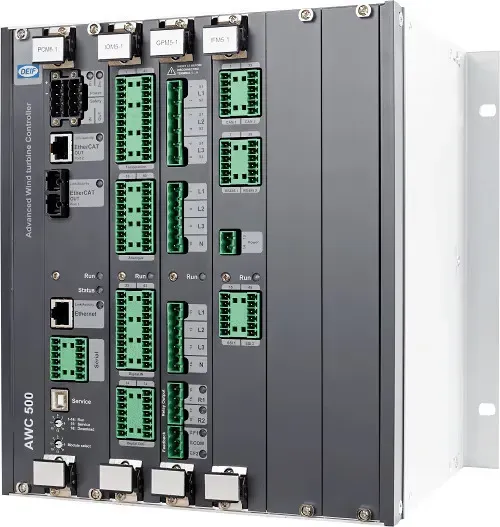
The DEIF AWC500 is a PLC-based programmable automation controller designed for demanding applications. It uses an embedded real-time Linux operating system and CODESYS CONTROL PLC runtime. The controller supports EtherCAT, CAN, SSI, TCP/IP and RS-422/485 communication interfaces. It also supports direct three-phase voltage and current measurement, making it suitable for applications where electrical measurement and automation control are closely connected. The AWC500 is designed for operating temperatures from -40 °C to 70 °C and provides resistance to vibration, shock and demanding
environmental conditions.
KDU provides automation and SCADA solutions for the marine, offshore, oil & gas and industrial sectors. Its capabilities extend beyond supplying individual automation components. KDU can support:
● Customised SCADA mimics and HMIs for process visualisation
● Integration using protocols such as Modbus RTU, Modbus TCP and NMEA
● Vessel Management Systems and machinery alarm monitoring
● Tank gauging and remote industrial process control
● Integration of PLCs and other automation components into wider control systems
A PLC can control equipment without SCADA, but operators still need a practical way to monitor the wider system. SCADA provides this supervisory layer by bringing information from PLCs and other devices into a centralised interface. Depending on the application, operators can use it to:
● View real-time equipment status
● Monitor process values
● Receive alarms and notifications
● Review historical trends
● Identify changes in operating conditions
● Monitor multiple systems from one interface
Choosing the right automation system requires more than selecting a PLC or SCADA platform. Controllers, field devices, communication protocols, HMIs and supervisory systems need to work together according to the application's requirements. KDU World provides electrical and automation solutions for specialised marine, offshore, oil & gas and industrial applications. Its portfolio includes DEIF controllers such as the AMC300, AMC600 and AWC500, along with SCADA-related integration, HMI and automation capabilities. With the right combination of PLC control and SCADA supervision, organisations can build automation systems that provide both reliable equipment control and clear operational visibility.
Keep Reading